Search in Las Palmas de Gran Canaria



Folklore in the Canarian Village
San Cristóbal Folkloric Grouping
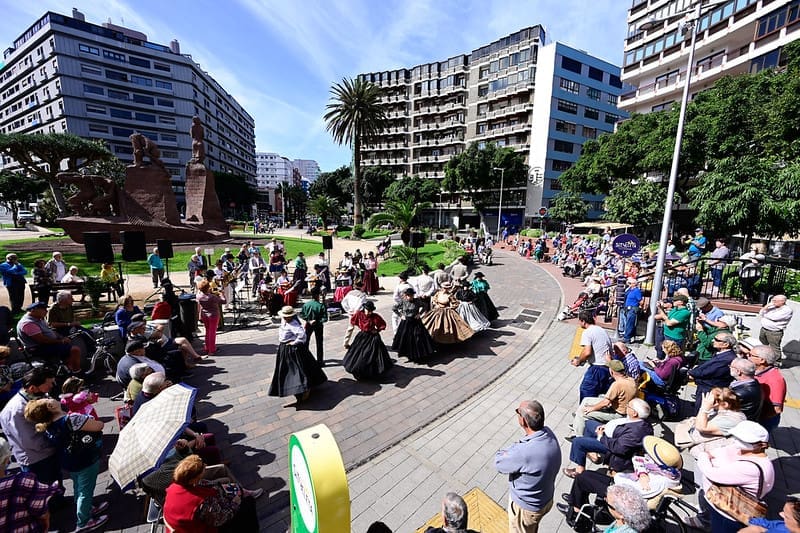
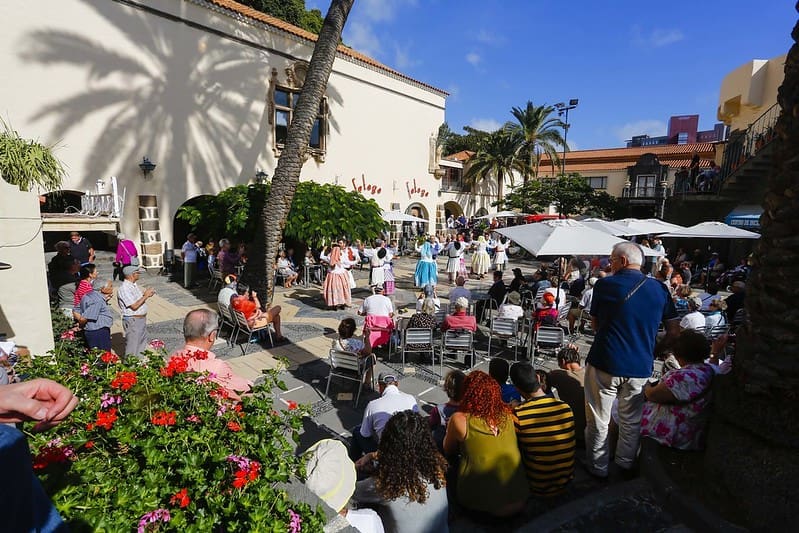
The Agrupación Folklórica San Cristóbal was founded in 1963, with the main objective of preserving and disseminating Canarian dance and song in its most traditional style. The Sunday performances at the Pueblo Canario have continued uninterruptedly from its beginnings to the present day.
The Canarian People
El Pueblo Canario hosts folkloric performances on Sundays, from 11:00 a.m. to 12:00 noon. This is an emblematic architectural and cultural complex located in Las Palmas de Gran Canaria, conceived in 1937 by the artist Néstor Martín-Fernández de la Torre and his brother, the architect Miguel Martín-Fernández de la Torre.
Inspired by Canarian customs, the project sought to create a space that would showcase local traditions, history and culture through pavilions dedicated to customs, the sea, local sports and other aspects of the island’s identity.
This complex, which is part of the neo-Canarian architecture, was conceived as a tourist attraction and a tribute to the essence of the Canary Islands.
History
After Nestor’s death in 1938, his brother Miguel continued with the project, which faced financial difficulties during the Spanish Civil War. Thanks to the support of local businessmen and merchants, construction began in 1939. Since its inauguration in 1956, the complex has included handicraft stores, flower shops, a bodegón and the Néstor Museum, located in a restored former hermitage.
Connection with folklore
From its inception, the Pueblo Canario was a vibrant space, with folkloric performances, exhibitions and a unique atmosphere that attracted tourists and locals alike.
A renewed symbol
Throughout time, the Pueblo Canario has withstood economic and political challenges, remaining a symbol of Canarian identity.
In the 21st century, following a renovation process that began in 2017, the complex has regained its splendor, with the reopening of the Bodegón in 2019 and the reinstatement of folk performances.
Today, the Pueblo Canario remains an iconic enclave, combining tradition and modernity, and represents a source of pride for the inhabitants of Las Palmas de Gran Canaria and a tourist attraction of great cultural value.
-
25 January 2026
-
Pueblo Canario.
-
08:00
- https://lpavisit.com
Folklore in the Canarian Village
San Cristóbal Folkloric Grouping
The Agrupación Folklórica San Cristóbal was founded in 1963, with the main objective of preserving and disseminating Canarian dance and song in its most traditional style. The Sunday performances at the Pueblo Canario have continued uninterruptedly from its beginnings to the present day.
The Canarian People
El Pueblo Canario hosts folkloric performances on Sundays, from 11:00 a.m. to 12:00 noon. This is an emblematic architectural and cultural complex located in Las Palmas de Gran Canaria, conceived in 1937 by the artist Néstor Martín-Fernández de la Torre and his brother, the architect Miguel Martín-Fernández de la Torre.
Inspired by Canarian customs, the project sought to create a space that would showcase local traditions, history and culture through pavilions dedicated to customs, the sea, local sports and other aspects of the island’s identity.
This complex, which is part of the neo-Canarian architecture, was conceived as a tourist attraction and a tribute to the essence of the Canary Islands.
History
After Nestor’s death in 1938, his brother Miguel continued with the project, which faced financial difficulties during the Spanish Civil War. Thanks to the support of local businessmen and merchants, construction began in 1939. Since its inauguration in 1956, the complex has included handicraft stores, flower shops, a bodegón and the Néstor Museum, located in a restored former hermitage.
Connection with folklore
From its inception, the Pueblo Canario was a vibrant space, with folkloric performances, exhibitions and a unique atmosphere that attracted tourists and locals alike.
A renewed symbol
Throughout time, the Pueblo Canario has withstood economic and political challenges, remaining a symbol of Canarian identity.
In the 21st century, following a renovation process that began in 2017, the complex has regained its splendor, with the reopening of the Bodegón in 2019 and the reinstatement of folk performances.
Today, the Pueblo Canario remains an iconic enclave, combining tradition and modernity, and represents a source of pride for the inhabitants of Las Palmas de Gran Canaria and a tourist attraction of great cultural value.
-
25 January 2026
-
Pueblo Canario.
-
08:00
- https://lpavisit.com