Search in Las Palmas de Gran Canaria



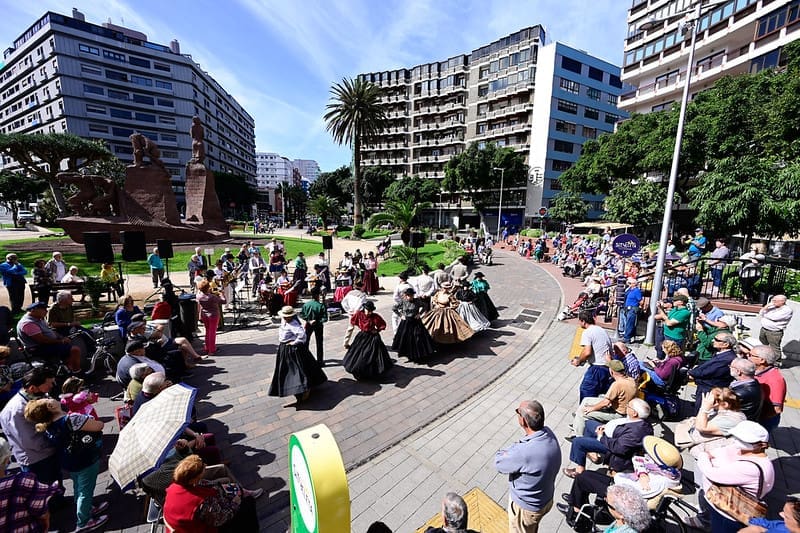
Folklore in the Canarian Village
Roque Nublo Folklore Group
The Roque Nublo Folklore Group emerged in the mid-20th century. Its first performance dates back to 1951, and since then it has become one of the city’s most established folklore ensembles. In fact, it was the first group to be officially registered in the Register of Cultural Associations of the Canary Islands.
Pueblo Canario
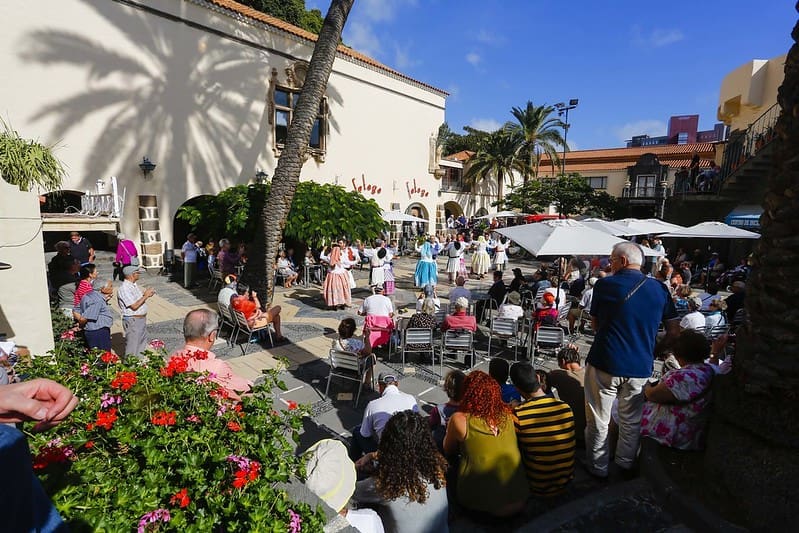
Pueblo Canario hosts folkloric performances every Sunday from 11:00 a.m. to 12:00 p.m. This is an emblematic architectural and cultural complex located in Las Palmas de Gran Canaria, conceived in 1937 by the artist Néstor Martín-Fernández de la Torre and his brother, the architect Miguel Martín-Fernández de la Torre.
Inspired by Canarian costumbrismo, the project aimed to create a space that would showcase local traditions, history and culture through pavilions dedicated to customs, the sea, traditional sports and other aspects of island identity.
This ensemble, part of Neo-Canarian architecture, was conceived as a tourist attraction and a tribute to the essence of the Canary Islands.
History
After Néstor’s death in 1938, his brother Miguel continued the project, which faced financial difficulties during the Spanish Civil War. Thanks to the support of local entrepreneurs and merchants, construction began in 1939. Since its inauguration in 1956, the complex has included craft shops, florists, a traditional tavern and the Museo Néstor, housed in a restored former hermitage.
Connection with folklore
From its beginnings, Pueblo Canario was a vibrant space, hosting folkloric performances, exhibitions and a unique atmosphere that attracted both visitors and local residents.
A renewed symbol
Over time, Pueblo Canario has withstood economic and political challenges, remaining a symbol of Canarian identity.
In the 21st century, following a renovation process that began in 2017, the complex regained its splendour, with the reopening of the Bodegón in 2019 and the return of folkloric performances.
Today, Pueblo Canario continues to be an iconic enclave that combines tradition and modernity, representing a source of pride for the people of Las Palmas de Gran Canaria and a tourist attraction of great cultural value.
-
11 January 2026
-
Pueblo Canario.
-
11:00
Folklore in the Canarian Village
Roque Nublo Folklore Group
The Roque Nublo Folklore Group emerged in the mid-20th century. Its first performance dates back to 1951, and since then it has become one of the city’s most established folklore ensembles. In fact, it was the first group to be officially registered in the Register of Cultural Associations of the Canary Islands.
Pueblo Canario
Pueblo Canario hosts folkloric performances every Sunday from 11:00 a.m. to 12:00 p.m. This is an emblematic architectural and cultural complex located in Las Palmas de Gran Canaria, conceived in 1937 by the artist Néstor Martín-Fernández de la Torre and his brother, the architect Miguel Martín-Fernández de la Torre.
Inspired by Canarian costumbrismo, the project aimed to create a space that would showcase local traditions, history and culture through pavilions dedicated to customs, the sea, traditional sports and other aspects of island identity.
This ensemble, part of Neo-Canarian architecture, was conceived as a tourist attraction and a tribute to the essence of the Canary Islands.
History
After Néstor’s death in 1938, his brother Miguel continued the project, which faced financial difficulties during the Spanish Civil War. Thanks to the support of local entrepreneurs and merchants, construction began in 1939. Since its inauguration in 1956, the complex has included craft shops, florists, a traditional tavern and the Museo Néstor, housed in a restored former hermitage.
Connection with folklore
From its beginnings, Pueblo Canario was a vibrant space, hosting folkloric performances, exhibitions and a unique atmosphere that attracted both visitors and local residents.
A renewed symbol
Over time, Pueblo Canario has withstood economic and political challenges, remaining a symbol of Canarian identity.
In the 21st century, following a renovation process that began in 2017, the complex regained its splendour, with the reopening of the Bodegón in 2019 and the return of folkloric performances.
Today, Pueblo Canario continues to be an iconic enclave that combines tradition and modernity, representing a source of pride for the people of Las Palmas de Gran Canaria and a tourist attraction of great cultural value.
-
11 January 2026
-
Pueblo Canario.
-
11:00